


Urban Design | Johnsonville
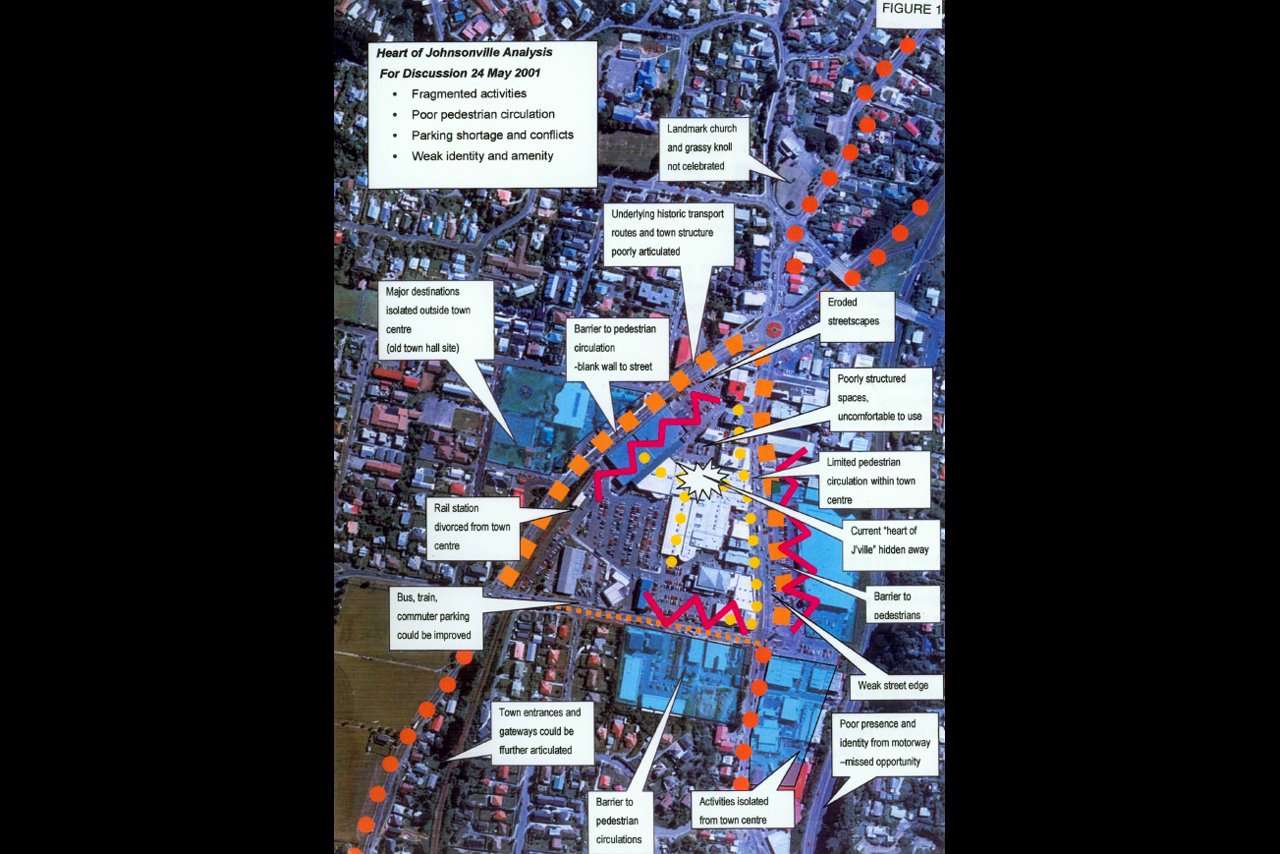
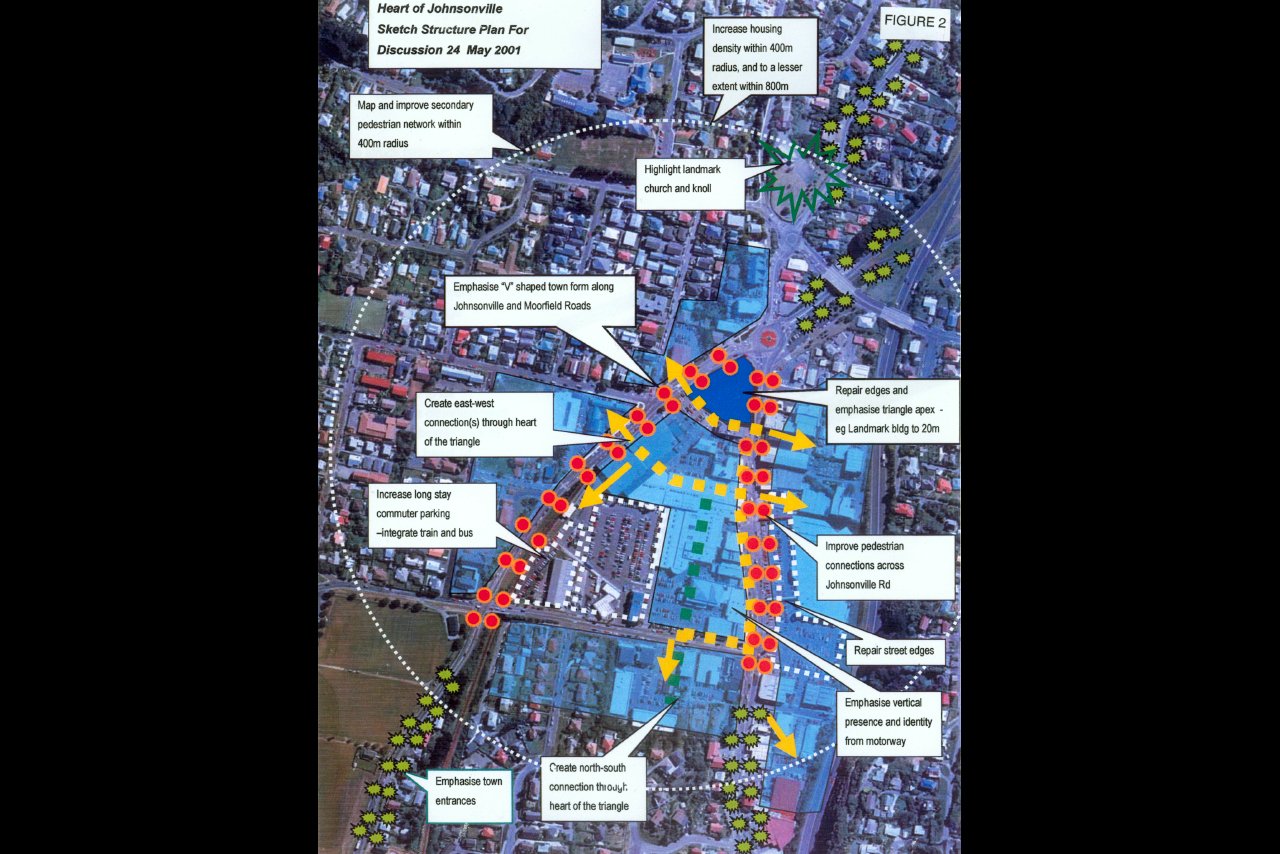
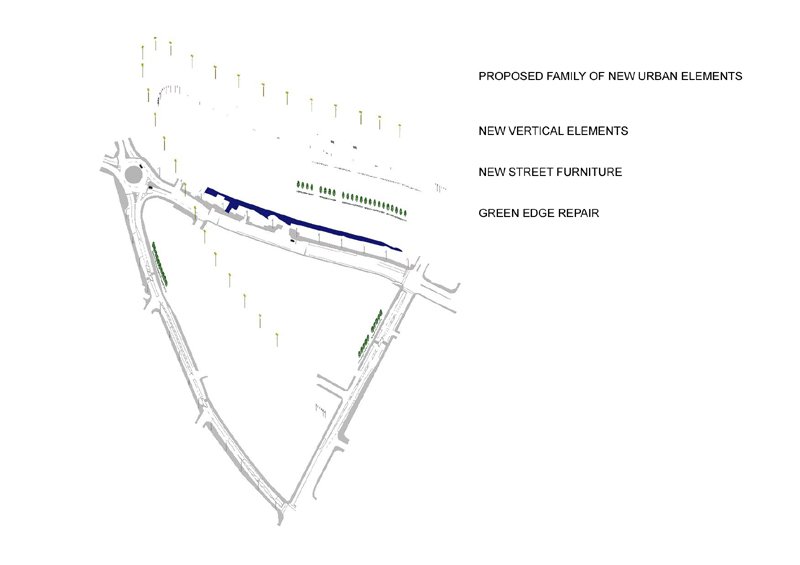
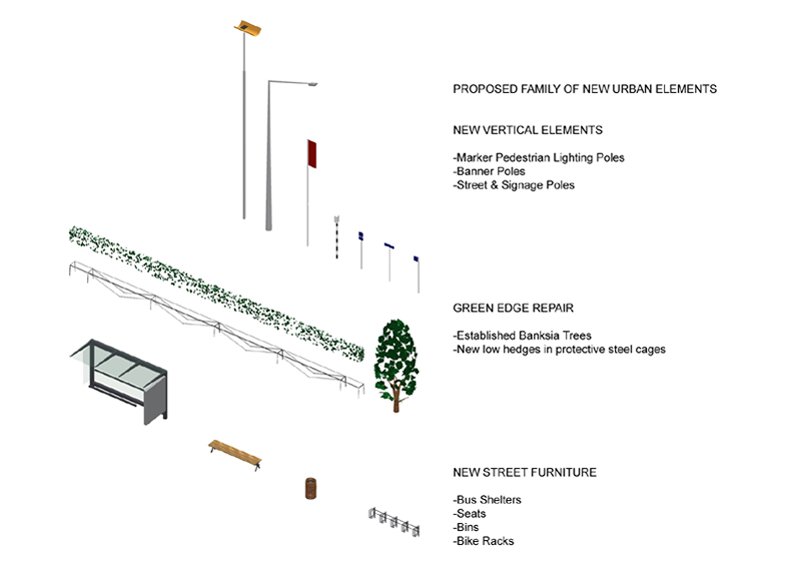
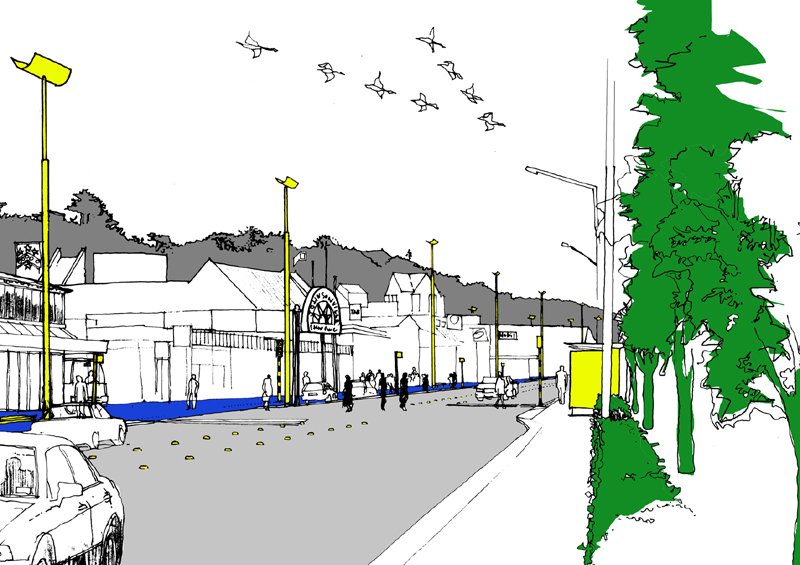
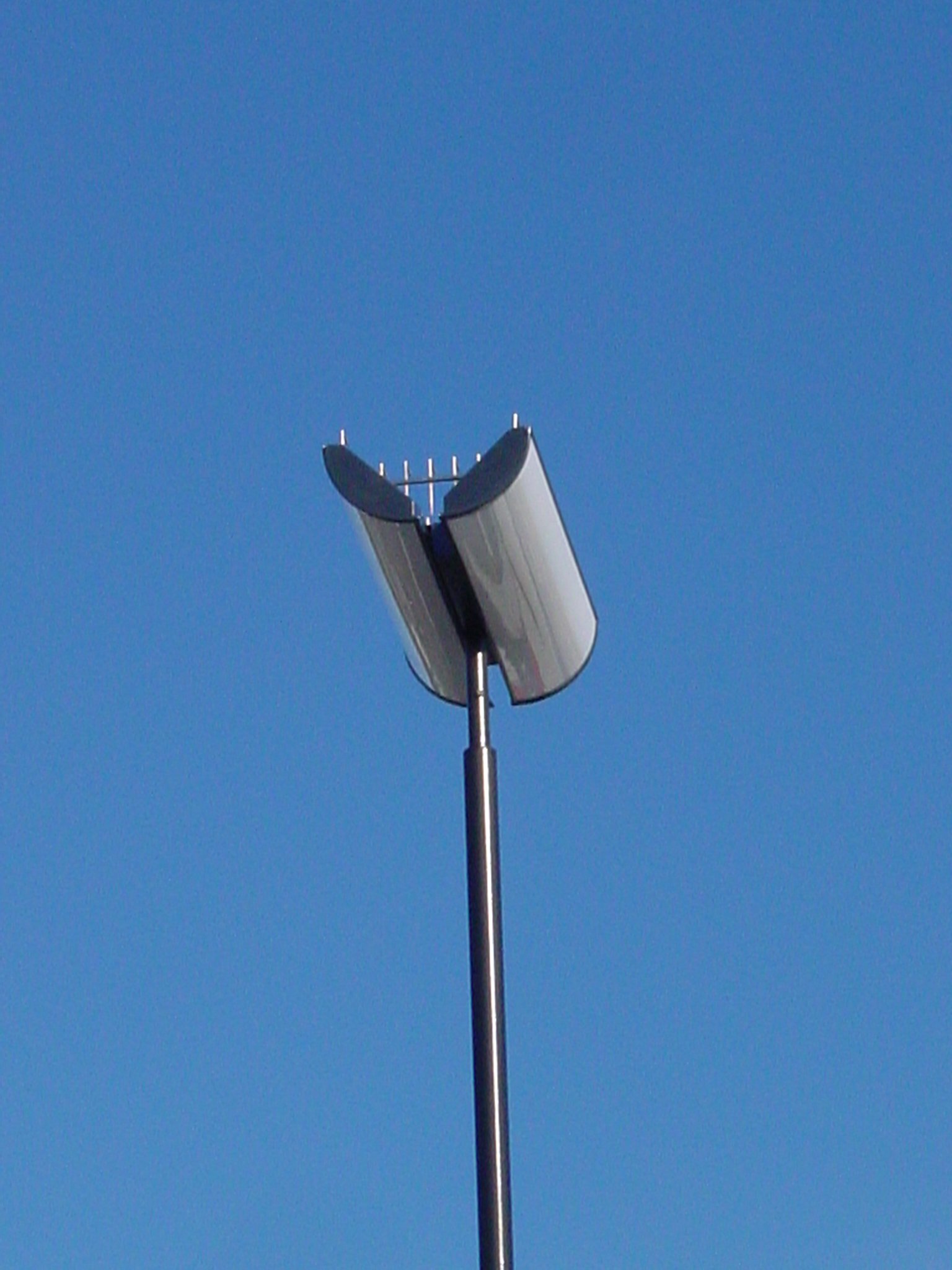
In Johnsonville we have chosen to emphasise the historic 'V' of the crossroads in the valley bowl at the top of the Ngauranga Gorge to generate the development plan for the area. Historically Johnsonville drew its importance from its physical placement on one of the main tracks leading north from the 'city.' Frank Johnston established his sawmill here in 1842 and a village grew where the track north crosses Waitohi stream (now underground). In 1866 Johnsonville was the first resting place for the horses arriving up Johnsonville Road on the 4-day coach journey to Wanganui. It developed into a thriving service centre when the railway went through along the line of Moorfield Road in 1855.This association is continued at an identity level by reference to the 'V" formation of flying geese, where the consideration of and assistance to one's team / neighbour to make communal progress is entertainingly emphasised. Johnsonville has always had a 'residential industrial blend' with a local work force separate from the city. The design team wants to allude to this local communality as it holds the key to Johnsonville's identity.The Isthmus Architecture Workshop Group have provided a series of new elements that mark the 'V' to give identity to the area at a scale for the passing motorist as well as the locals and to indicate the Johnsonville centre, which has been eroded over time. The emphasis of the historic crossroads and the linkages across the bowl also form the fundamental part of the 20-year Development Plan
Credits
Client: Wellington City Council
Architecture: Architecture Workshop Ltd
Landscape: Isthmus Group Ltd
Structural: Clendon Burns & Park Ltd
Main Contractor: Construction Services Co. Ltd
Design Team: Christopher Kelly, James Fenton, Nigel Gilkison, Tim Hervey,
Jonno Wilson, Gavin Lister, Nik Kneale, Tim Fitzpatrick.
Awards
NZIA Local Architecture Award, 2004